
Final Expense Insurance in North Carolina
Compare burial and final expense coverage with a licensed North Carolina insurance agent.
Final expense insurance can help provide money for funeral, burial, medical, and other end-of-life costs.
Your age, health, budget, and coverage goals can affect which options you qualify for—and whether a waiting period applies.
Start your quote below ↓ · Licensed NC Agent · No Pressure

Get My Final Expense Quote
Complimentary, no-pressure review · Phone and virtual appointments · Based in Concord, North Carolina
What is final expense insurance?
Final expense insurance is generally a form of permanent whole life insurance designed for people who want a smaller amount of coverage.
Rather than replacing years of income or covering a large mortgage, the goal is often much more specific: leaving money behind so your family does not have to absorb certain expenses on their own.
The benefit is generally paid to the person or people you name as beneficiaries. They can then use those funds based on the needs they face at the time.
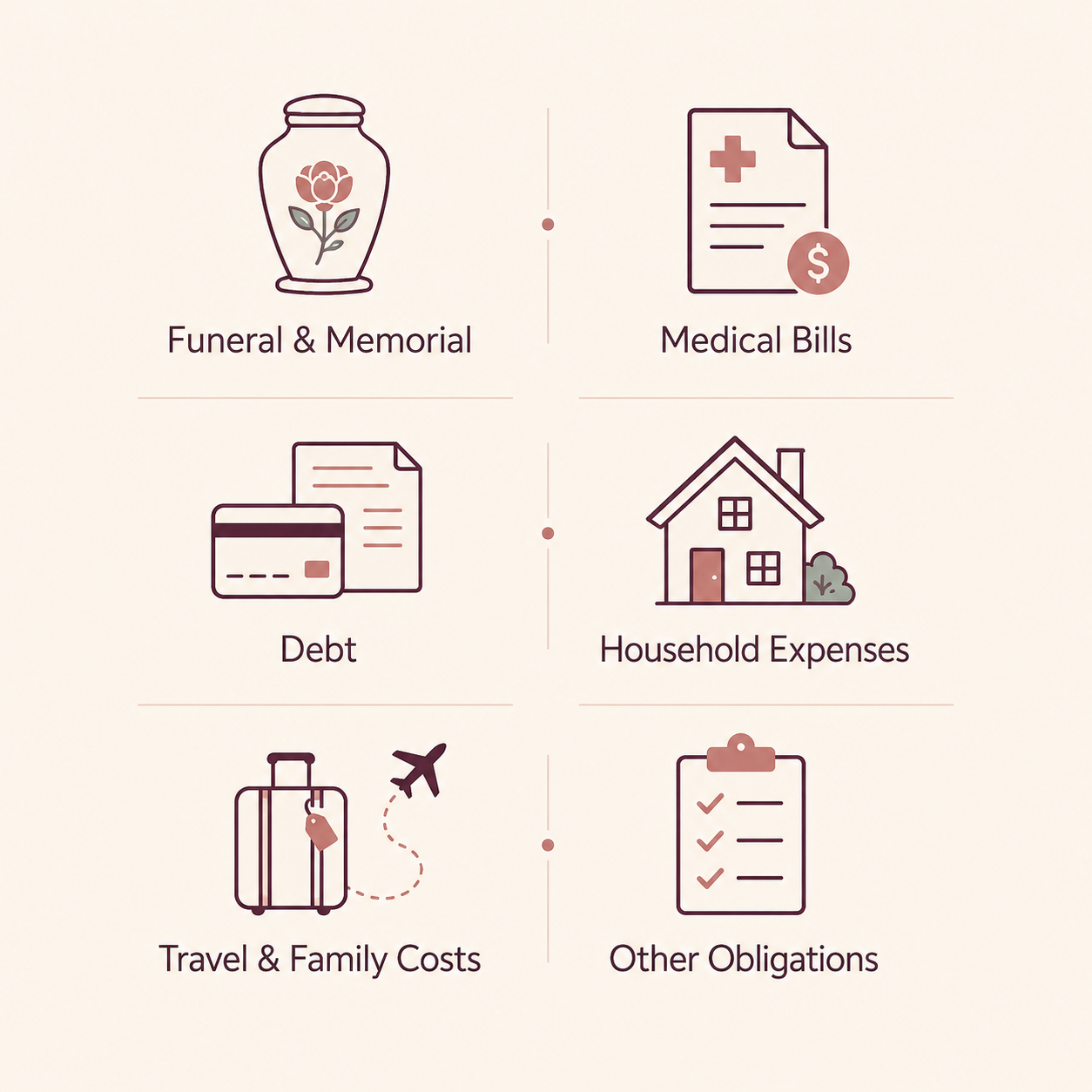
Coverage is typically used for expenses such as:
Who Is Final Expense Insurance For?
The first question should be what you need the coverage to accomplish.
Final expense coverage may be worth exploring when your main goal is to reduce the financial burden your family could face after your death.
It may fit if you:
• Want money available for funeral, burial, or related expenses.
• Have limited savings set aside for those costs.
• Prefer a smaller permanent life insurance benefit.
• Have health conditions that make other coverage harder to qualify for.
It is not automatically the right choice simply because of your age.
How Much Final Expense Insurance Do I Need?
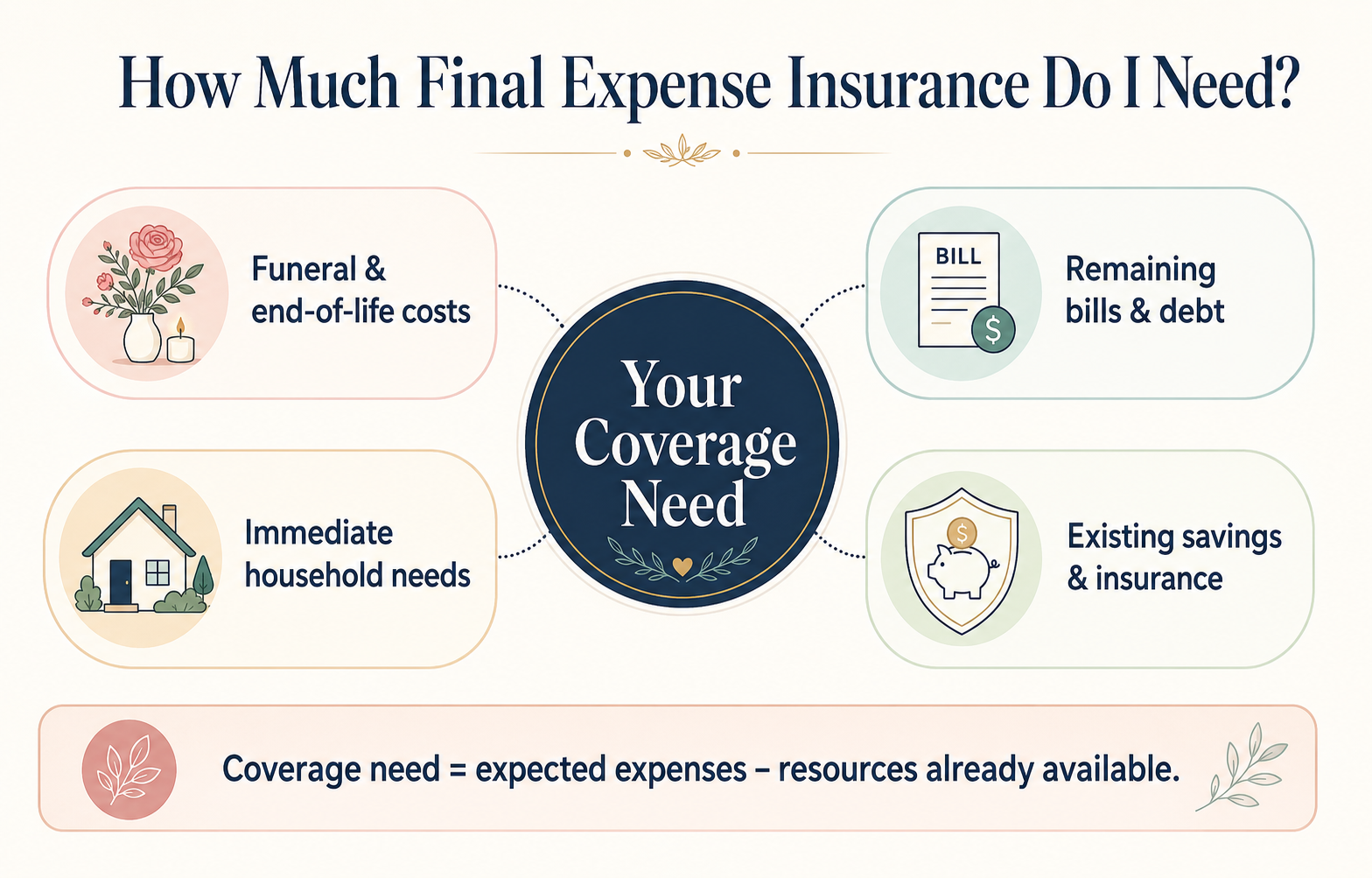
There is no single right amount. Start with the gap your family could realistically face.
Consider:
• Funeral, burial, cremation, or memorial costs.
• Medical bills and immediate household expenses.
• Smaller debts that may remain.
• Existing savings, prepaid arrangements, and other life insurance.
The goal is not to buy the largest amount available. It is to choose coverage that fits the need and your budget.
Not sure whether final expense insurance is right for you? Let’s review it together.
One of the most important parts of choosing final expense insurance is understanding how the coverage is underwritten and when the full death benefit becomes available.
Depending on your health and the company offering the coverage, you may qualify for different types of coverage.
Not all final expense coverage is the same
-
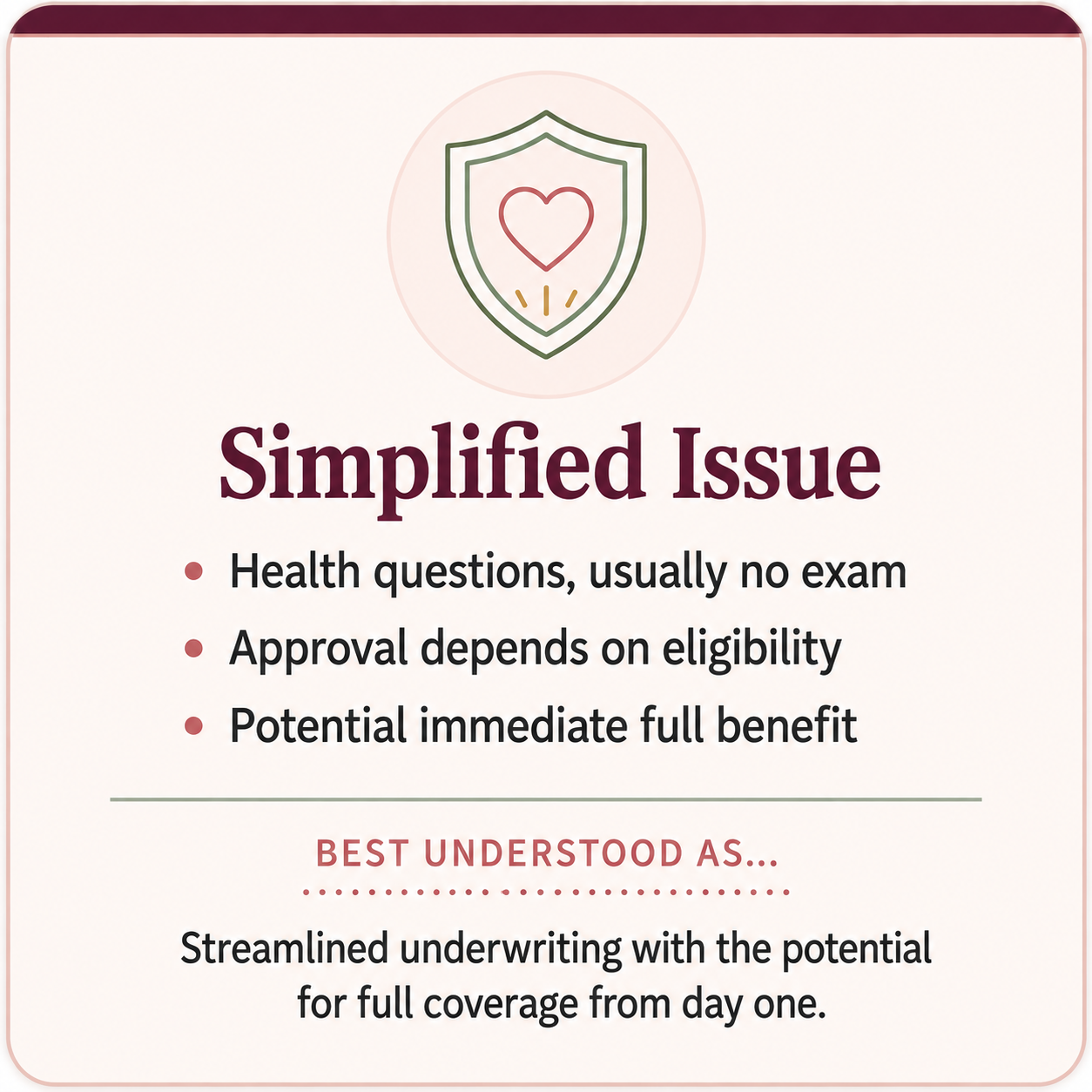
Simplified-issue coverage typically uses health questions and other underwriting information without requiring a traditional medical exam.
Depending on your health history, you may be able to qualify for coverage that provides the full natural-death benefit from the beginning.
Eligibility, available coverage amounts and pricing vary by company.
No medical exam does not necessarily mean no health questions.
-
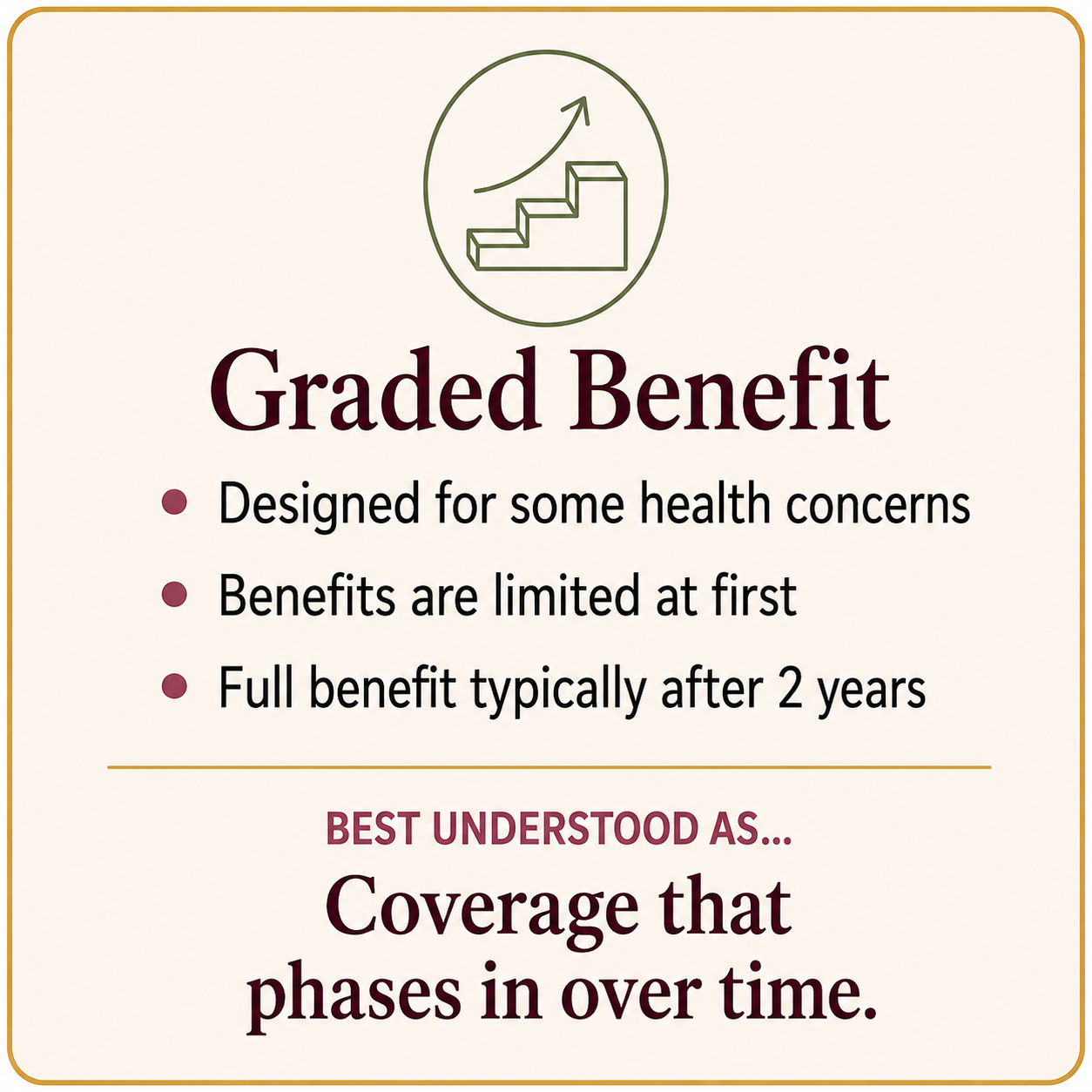
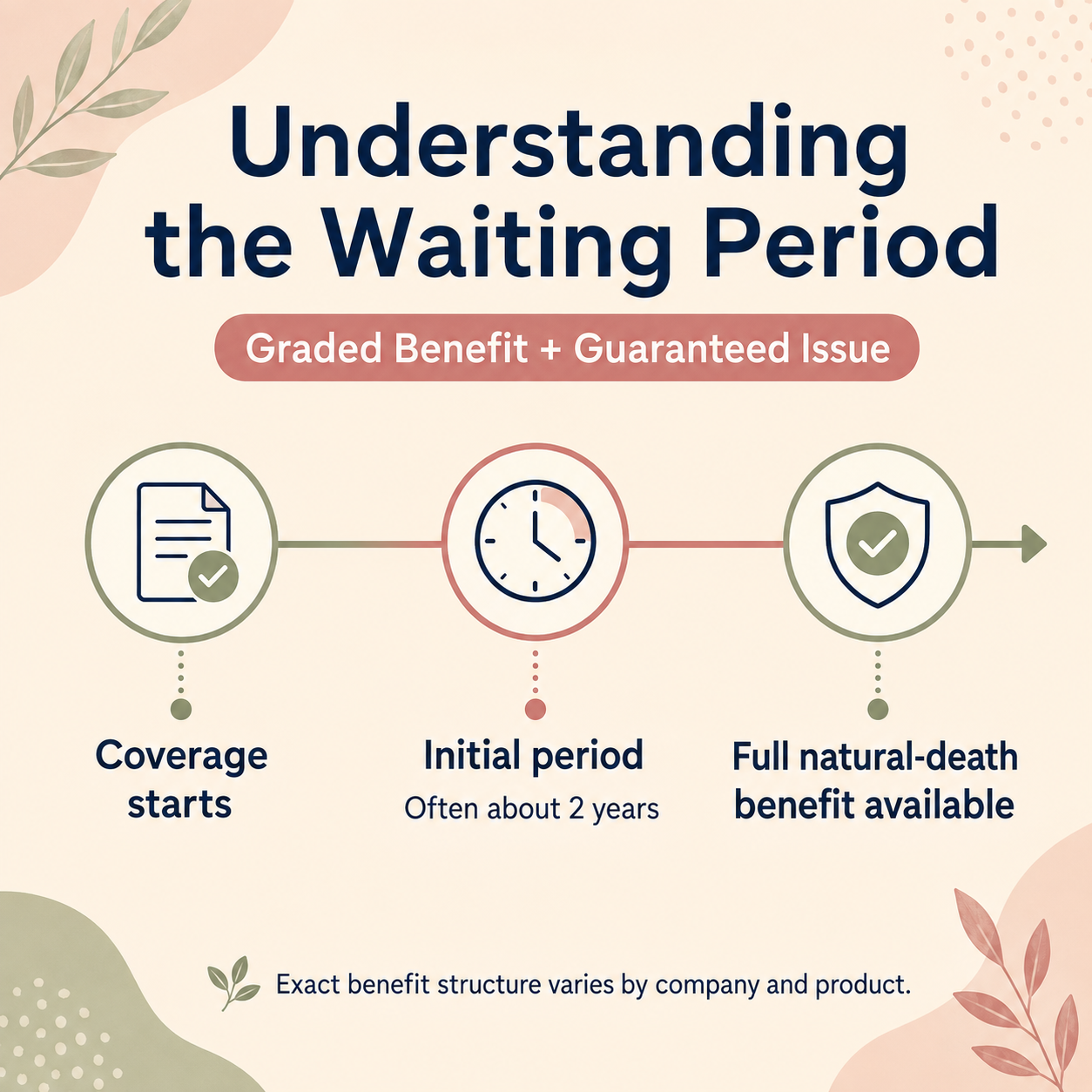
If certain health conditions prevent you from qualifying for immediate full benefits, a graded-benefit plan may be another option.
These plans commonly include a waiting period — typically around two years — before the full natural-death benefit becomes available.
If death from natural causes occurs during the waiting period, the amount paid is determined by the specific plan and company and may be based on premiums paid plus an additional amount rather than the full coverage amount.
Accidental-death provisions may be different.
Because the details vary significantly, it is important to understand exactly how the benefit works before enrolling.
-
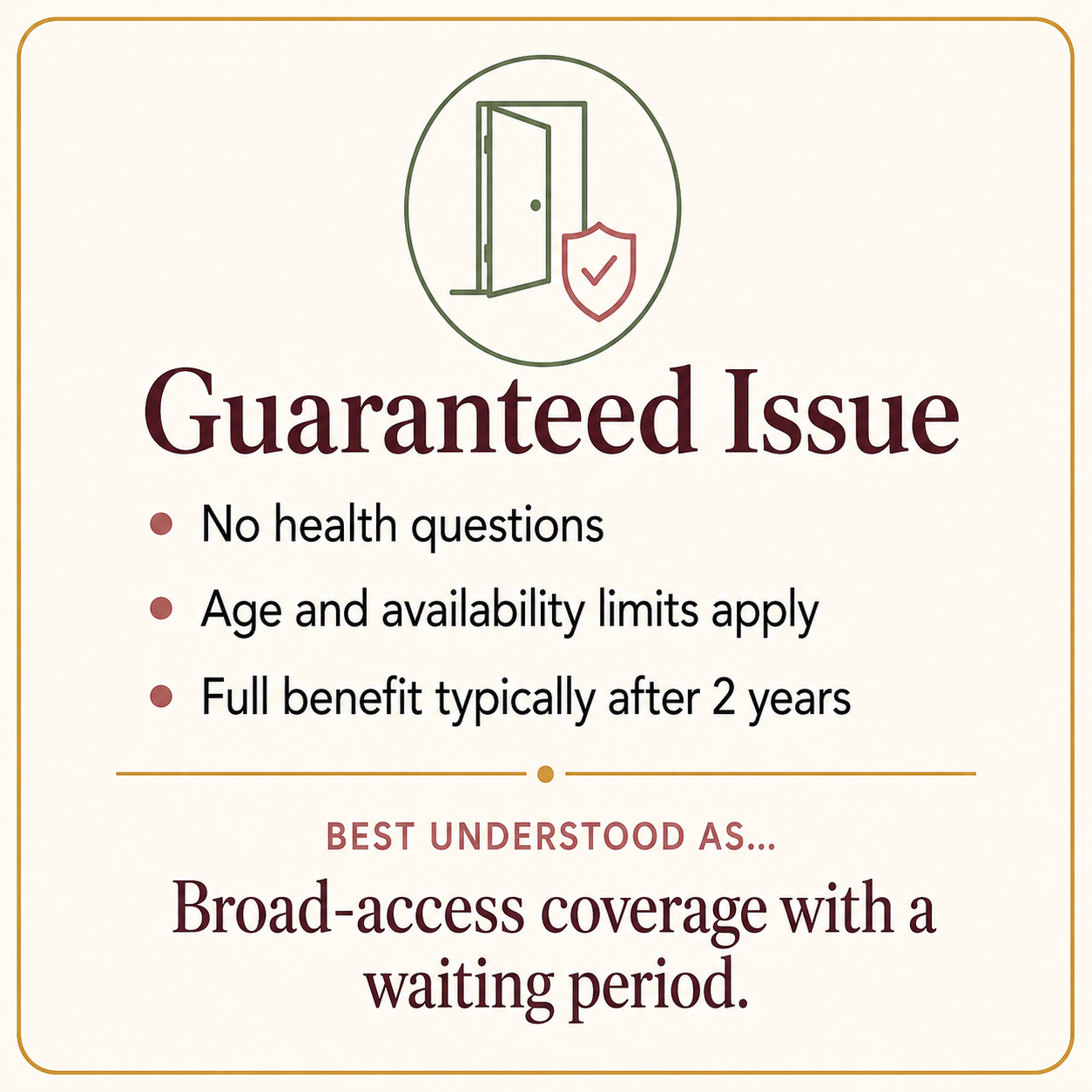
Guaranteed-issue life insurance generally allows eligible applicants to obtain coverage without answering health questions.
That accessibility comes with tradeoffs.
Coverage amounts may be more limited, premiums may be higher relative to the amount of coverage, and these plans commonly include a graded or limited-benefit period — often approximately two years — for death from natural causes.
Eligibility requirements, age ranges, benefit structures and waiting periods vary by company and product.
Guaranteed issue should not automatically be your first option.
If your health allows you to qualify for simplified-issue or level-benefit coverage, you may have options that provide stronger immediate protection.
That is why I prefer to look at your health and available choices before assuming guaranteed issue is necessary.
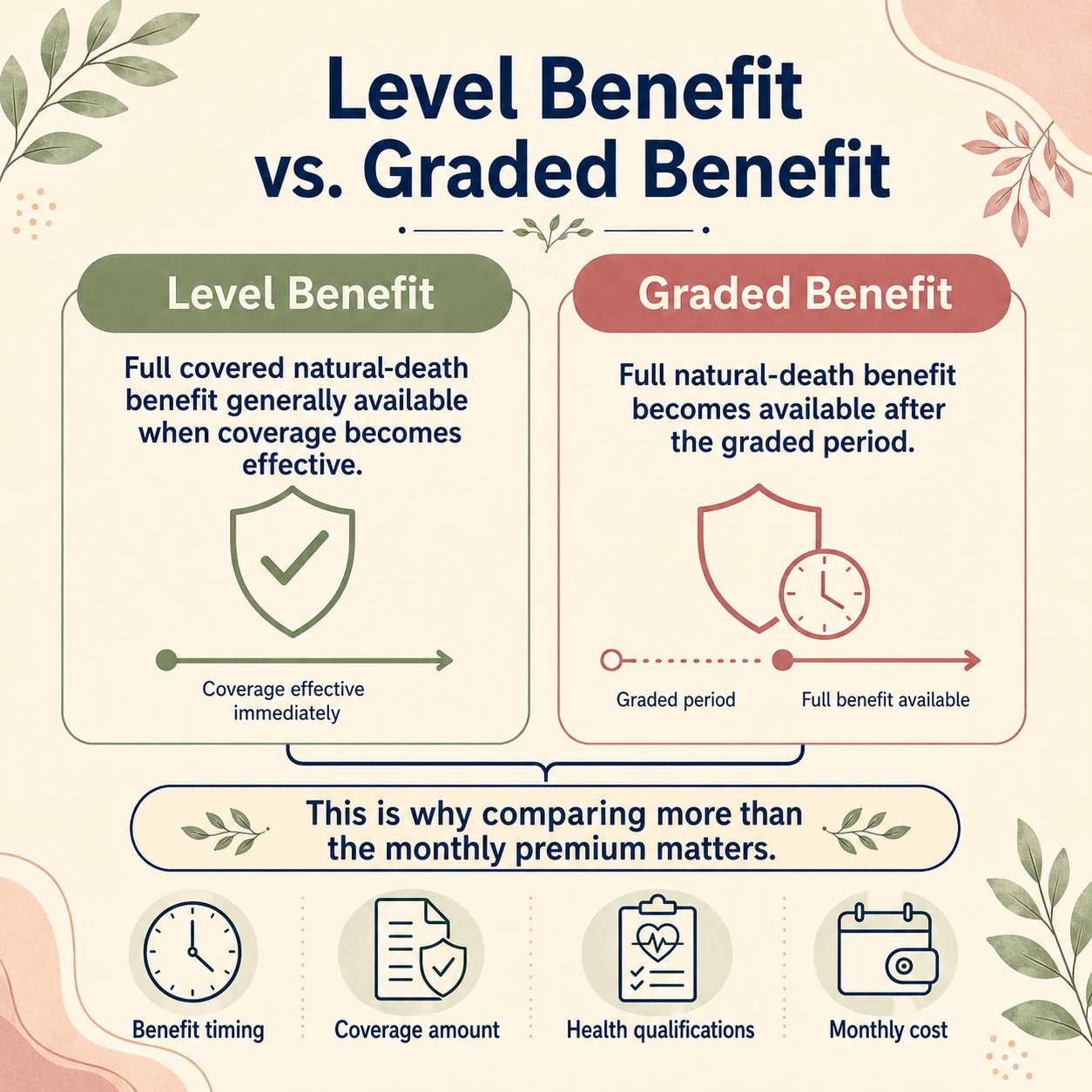
Level Benefit vs. Graded Benefit: Why It Matters
Two plans can both be described as “final expense insurance” while providing very different protection during the first years of coverage.
Level Benefit
With level-benefit coverage, the full death benefit for covered causes is generally available once the coverage becomes effective, subject to the terms and exclusions of the contract.
Graded Benefit
With graded-benefit coverage, the full natural-death benefit is not immediately available. A waiting period — commonly about two years — typically applies.
For someone who qualifies for level benefits, that distinction can be significant.
When comparing options, we will look at more than just the monthly price.
We will also consider:
When the full benefit becomes available
How much coverage you receive
Your health qualifications
The monthly cost
The company offering the coverage
How the benefit works during any waiting period
Can I Get Final Expense Insurance With Health Conditions?
Possibly.
Having a medical condition does not automatically mean you need guaranteed-issue coverage.
Different insurance companies evaluate health conditions differently. A condition that limits your options with one company may be treated differently by another.
Depending on your health history, you may qualify for:
Level-benefit simplified-issue coverage
Graded-benefit coverage
Guaranteed-issue coverage
That is one reason it can be helpful to compare available options rather than starting with a single company or assuming you will not qualify.

The decision does not always have to be either/or. A combination of term and permanent coverage may address different needs, depending on eligibility and budget.
Final Expense Insurance vs. Traditional Whole Life Insurance
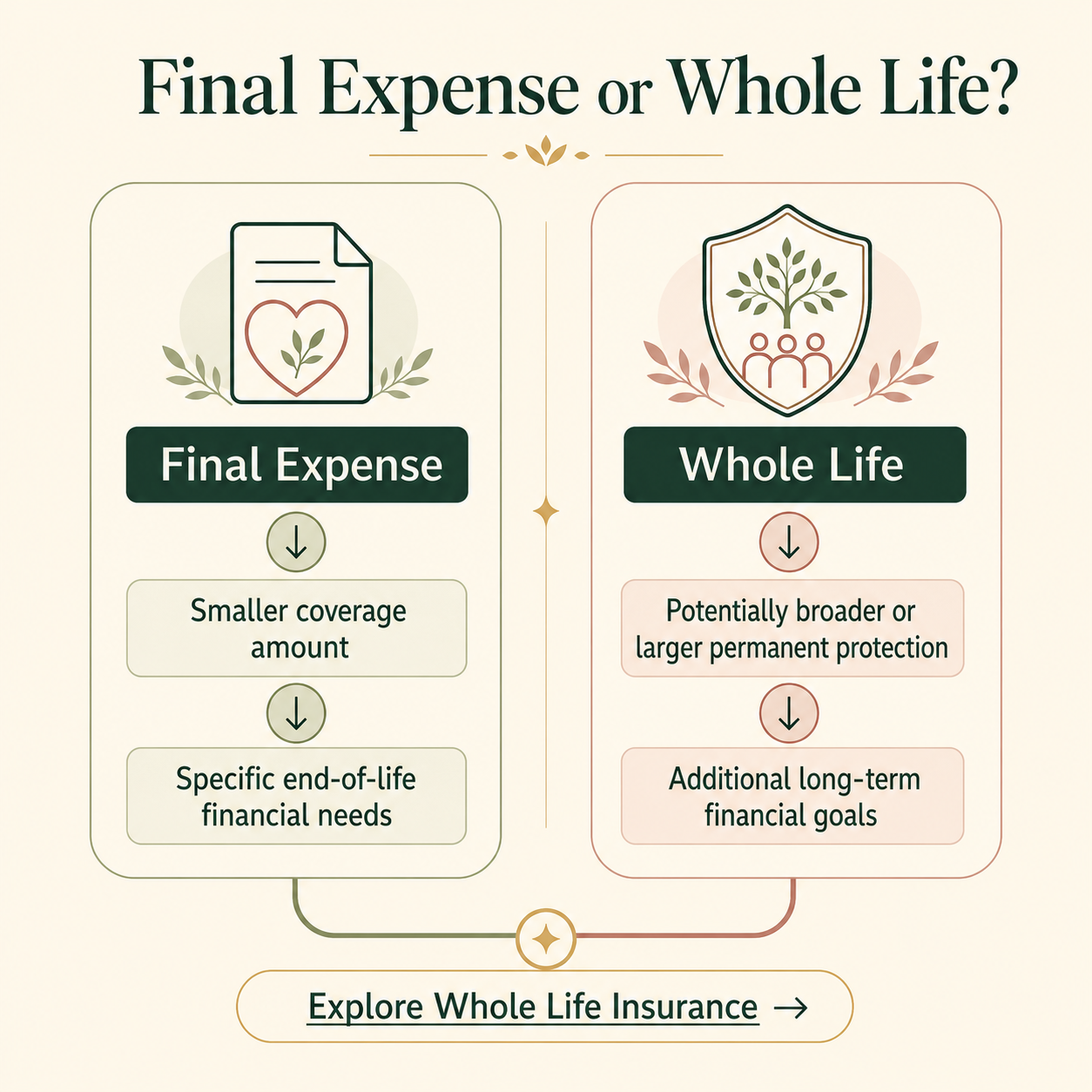
Final expense insurance is generally a type of whole life insurance, but it is usually purchased for a much more specific purpose.
Traditional whole life insurance may be used for broader financial goals and can be available in larger coverage amounts.
Final expense insurance is generally smaller permanent coverage designed primarily to help with expenses associated with the end of life.
If you need substantial protection for income replacement, a mortgage, children or other long-term financial responsibilities, final expense coverage alone may not provide enough protection.
Final Expense insurance should make sense before you commit to it.

April Mai · Licensed Insurance Agent · NPN 21523134
Working with me should feel like a conversation, not a sales pitch.
We’ll start with your life: your family, goals, budget and how long you expect the need for coverage to last. If final expense coverage is worth considering, I’ll help you compare available options from multiple carriers and explain the premium, death benefit, underwriting, and any waiting period in plain language.
If term coverage, another permanent option or a combination of coverage better matches the need we identify, we will review those options as well.
My goal is not simply to help you apply for life insurance. It is to help you understand what you are choosing, what it requires and how it is intended to protect the people who matter to you.
Complimentary consultation · Based in Concord · Serving clients throughout North Carolina, South Carolina, California, and Oregon
Final expense insurance in North Carolina
If you live in North Carolina, your final expense options can vary based on your age, health and the companies offering coverage in the state.
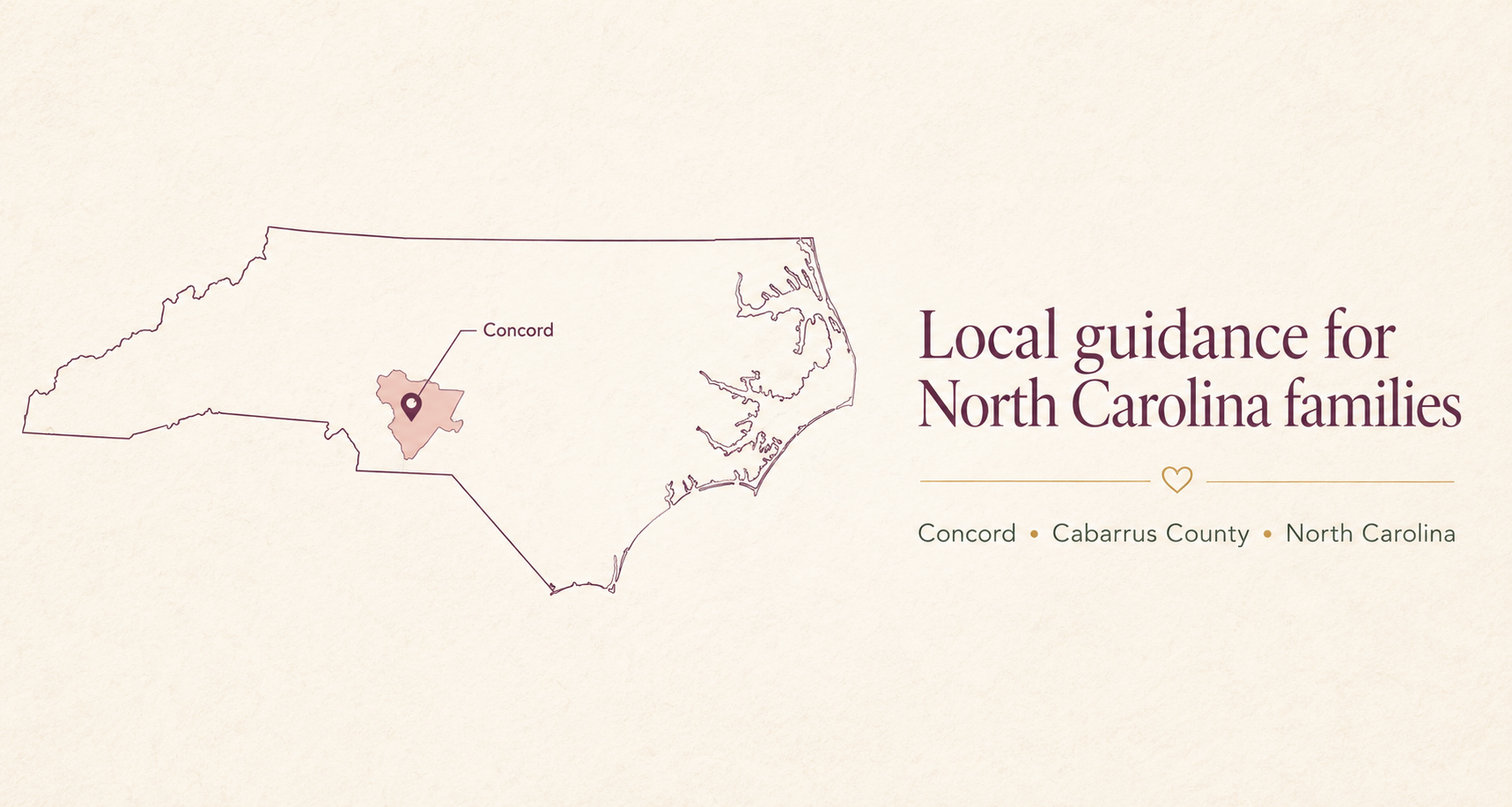
I help individuals and families in Concord, Cabarrus County and throughout North Carolina understand what coverage is available and how the different benefit structures work.
My approach starts with your needs.
We can look at:
What expenses you actually want covered
What savings or existing life insurance you already have
Your health and potential eligibility
Whether immediate level benefits are available
How much coverage makes sense
What fits comfortably within your budget
Frequently asked questions about final expense insurance in North Carolina
-
The terms “final expense insurance” and “burial insurance” are often used to describe similar types of smaller permanent life insurance coverage. The benefit is not necessarily limited to funeral or burial expenses, however. Your beneficiary can generally use the money based on the expenses they need to address.
-
Most final expense coverage is structured as whole life insurance. It is designed to provide permanent coverage rather than coverage for a specific term, provided the requirements of the coverage are met.
-
Many final expense plans do not require a traditional medical exam. Simplified-issue plans may still ask health questions and use other underwriting information. Guaranteed-issue coverage generally does not require health questions, but eligibility requirements and benefit limitations can apply.
-
Not always.
People who qualify for level-benefit coverage may be able to receive the full covered natural-death benefit without a graded waiting period.
Graded-benefit and many guaranteed-issue plans commonly have a waiting period of approximately two years before the full natural-death benefit becomes available.
The exact terms vary by company and product.
-
The answer depends on the specific coverage.
With many graded or guaranteed-issue plans, natural death during the initial waiting period does not result in payment of the full stated death benefit. The beneficiary may instead receive an amount based on premiums paid plus an additional amount.
Accidental-death provisions may be different.
It is important to review how a specific plan handles the waiting period before enrolling.
-
Potentially. Different insurance companies have different underwriting guidelines.
A health condition does not automatically mean guaranteed-issue coverage is your only option. Depending on your medical history, you may still qualify for simplified-issue or level-benefit coverage.
-
The right amount depends on what you want the money to cover.
Consider funeral or cremation expenses, medical bills, debts, household expenses, existing savings, prepaid arrangements and any life insurance you already have.
The goal should be to cover the financial gap your family may actually face.
-
Generally, yes. Life insurance proceeds are paid to the beneficiary rather than directly to a funeral home unless a particular arrangement states otherwise. The beneficiary can generally decide how the money is used.
-
No. Final expense insurance is commonly marketed toward older adults, but age alone should not determine what type of life insurance is appropriate.
Your financial responsibilities, health, budget, existing coverage and the purpose of the insurance should all be considered.
-
Not necessarily.
Guaranteed-issue coverage can provide an important option for people who cannot qualify for other coverage, but it commonly comes with lower available coverage amounts, higher cost relative to the benefit and a waiting period for the full natural-death benefit.
If you can qualify for level-benefit coverage, it is worth comparing that option before choosing guaranteed issue.