
Whole Life Insurance for Long-Term Protection
Whole life insurance is designed to provide permanent protection, generally with premiums that remain level and cash value that builds according to the policy’s terms.
But permanent coverage is a long-term commitment—not an automatic fit for everyone. I’ll help you understand how it works, compare available options and decide whether it makes sense for the people and goals you want to protect.

Independent licensed insurance agent
Access to options from multiple carriers
Personalized, no-pressure guidance
Serving eligible clients in NC, SC, CA and OR
Complimentary consultations & free whole life insurance quotes · Phone and virtual appointments available · Based in Concord, North Carolina
What is whole life insurance?
Whole life insurance is a type of permanent life insurance. Unlike term coverage, which is issued for a specified number of years, whole life coverage is designed to remain in force for the insured person’s lifetime as long as the required premiums are paid and the policy’s conditions are met.
Traditional whole life insurance generally combines three features:
-
The coverage does not end after a 10-, 20- or 30-year term. It is designed for needs that may remain throughout your life.
-
With traditional whole life coverage, the scheduled premium generally remains level. Limited-pay versions may allow premiums to be completed over a shorter period.
-
The policy builds cash value over time according to its contract. That value may be accessible while the insured person is living, although loans and withdrawals can affect the policy.
Why do people consider whole life insurance?
Whole life coverage is often considered when the need for protection is expected to last for life rather than for a temporary period.

Prepare for final expenses
Help loved ones manage funeral costs and other end-of-life expenses without adding as much financial strain to an already difficult time.

Leave something behind
Provide a defined benefit that may support family members, charitable intentions or other legacy goals.


Provide a permanent death benefit
Create funds for the people or organizations you name as beneficiaries, subject to the policy’s terms and any outstanding loans or withdrawals.
Add coverage to a broader plan
Some people use permanent coverage alongside term insurance—rather than expecting one type of coverage to meet every need.
Not sure whether your need is temporary or permanent? Let’s review it together.
How does whole life insurance work?
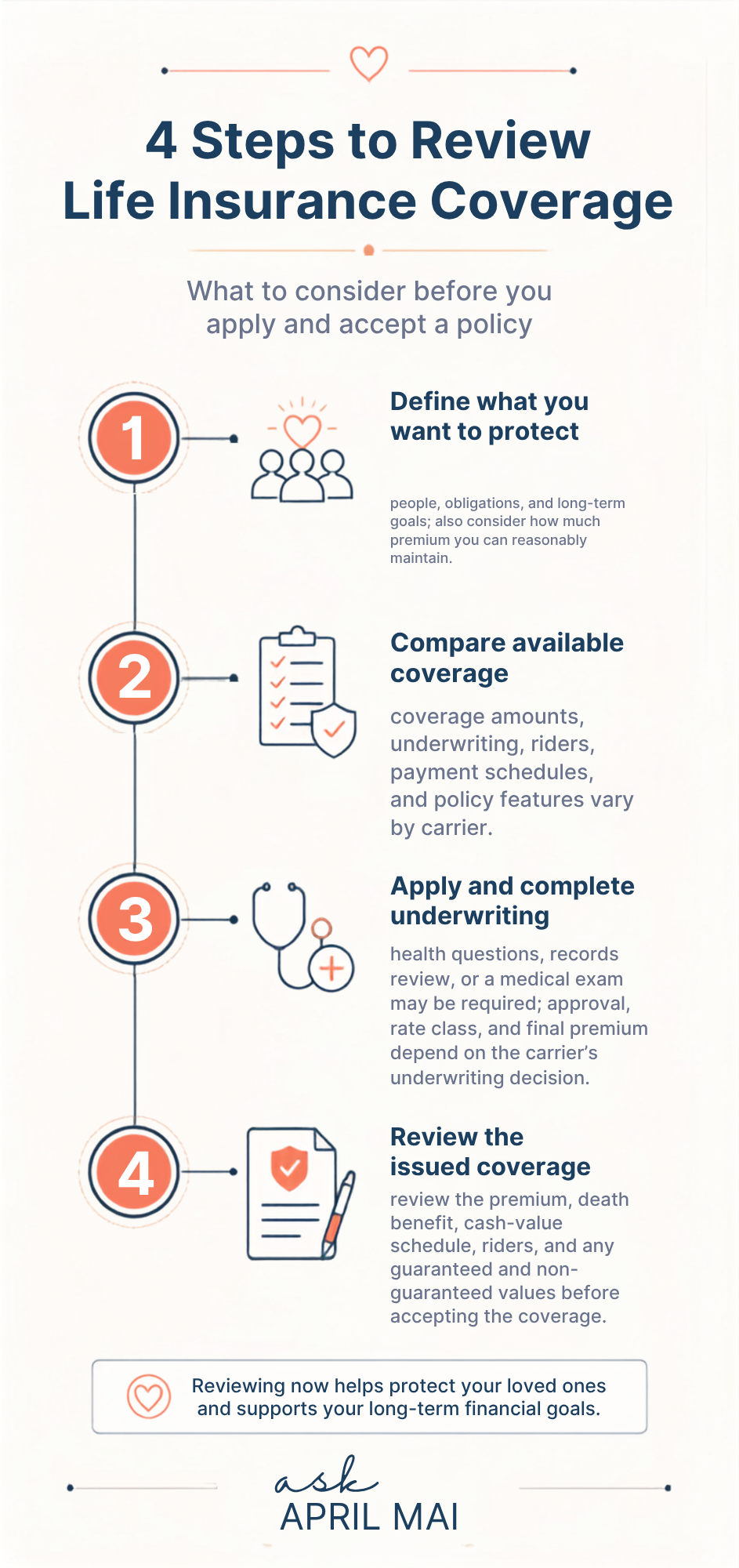
How does whole life insurance cash value work?
Depending on the contract, a policyowner may be able to access available value through a policy loan, a withdrawal or by surrendering the coverage. Those choices are not the same as taking money from a traditional savings account:
Policy loans accrue interest.
Loans and withdrawals can reduce the cash value and death benefit.
An outstanding loan may reduce what beneficiaries receive.
A large loan or withdrawal can contribute to a lapse if the coverage is not managed properly.
Surrendering the coverage ends the life insurance and may involve surrender charges or tax consequences.
I’ll help you understand the numbers shown for the specific coverage you are considering. For personal tax or legal guidance, consult a qualified tax or legal professional.
Guaranteed and non-guaranteed values are not the same
When reviewing a whole life illustration, pay attention to:
The guaranteed premium schedule
The guaranteed death benefit
The guaranteed cash value by year
Any non-guaranteed dividends or additional values
The effect of loans, withdrawals and surrender
How long you expect to maintain the coverage
Participating whole life coverage may be eligible for dividends, but dividends are not guaranteed. I’ll help you distinguish contractual guarantees from projections before you make a decision.
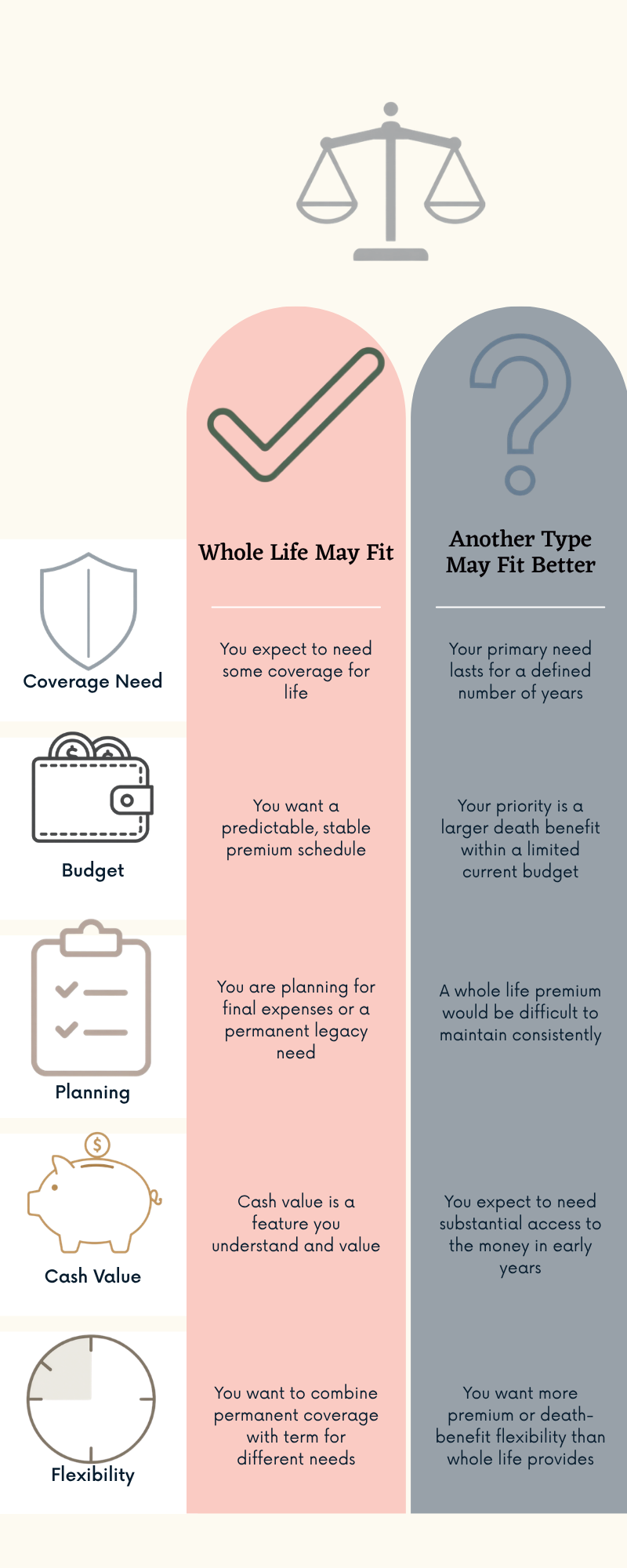
Is whole life insurance right for you?
You do not need to decide which category you fall into before we talk. We can compare the tradeoffs using your actual goals, timeframe and budget.
Whole life insurance vs. term life insurance
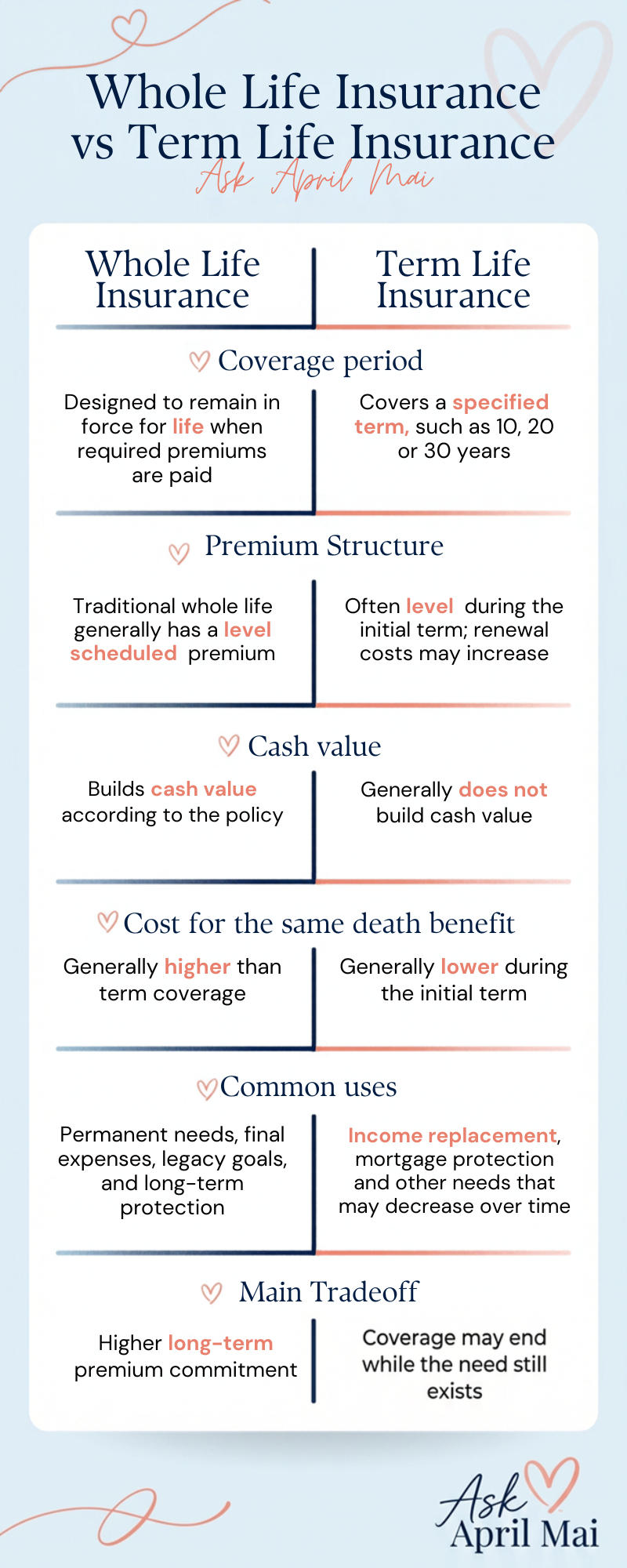
Both types can protect the people who depend on you, but they are designed for different timeframes and priorities.
The decision does not always have to be either/or. A combination of term and permanent coverage may address different needs, depending on eligibility and budget.

How much does whole life insurance cost?
There is no single price for whole life insurance. The premium is based on the coverage being requested and the insurance carrier’s underwriting guidelines.
Factors that can affect the premium and available options include:
Age
Current and historical health
Tobacco or nicotine use
Coverage amount
Premium-payment schedule
Riders and added benefits
Occupation, hobbies and other underwriting factors
The insurance carrier
Whole life insurance generally costs more than term insurance for the same death benefit because it is designed for permanent coverage and includes cash value. The lowest initial premium is not the only number to consider. The coverage should be understandable, suitable for the need and affordable enough to maintain.
Some whole life coverage may be available without a traditional medical exam. You may still need to answer health questions, and the carrier may use other underwriting information to determine eligibility and pricing.
Whole life options can be structured differently
-
Permanent coverage with premiums generally scheduled for life, a defined death benefit and cash value that builds according to the policy.
-
Coverage designed to become paid-up after premiums are made for a specified period, such as 10 or 20 years, or to a stated age. Premiums are generally higher during the payment period than comparable lifetime-pay coverage.
-
Generally smaller permanent coverage designed to help loved ones pay for funeral costs and other final expenses. Available amounts and qualification requirements vary by carrier.
-
Permanent coverage purchased while a child is young. Depending on the coverage, it may build cash value and continue into adulthood as long as required premiums are paid.
-
Coverage that may use health questions and other underwriting information without a traditional medical exam. Available coverage amounts, eligibility and pricing vary by carrier. Final expense coverage is often structured this way.
-
Coverage designed for people who may not qualify for traditional or simplified-issue coverage because of certain health conditions. These plans typically provide limited benefits for death from natural causes during an initial waiting period, often the first two years, with the full death benefit available afterward. Accidental death may be covered differently. Eligibility, benefit schedules, coverage amounts and pricing vary by carrier.
-
Coverage that generally does not require a medical exam or health questions, making it an option for people who may have difficulty qualifying for other types of life insurance. These plans typically include a waiting period—often two years—before the full death benefit is available for death from natural causes. During the waiting period, beneficiaries may instead receive a return of premiums paid plus an additional amount, depending on the carrier. Coverage amounts, age requirements, waiting periods and pricing vary by carrier.
Product availability, features and underwriting requirements vary by state and carrier
Whole life insurance should make sense before you commit to it

April Mai · Licensed Insurance Agent · NPN 21523134
Working with me should feel like a conversation, not a sales pitch.
We’ll start with your life: your family, goals, budget and how long you expect the need for coverage to last. If whole life is worth considering, I’ll help you compare available options from multiple carriers and explain the premium schedule, death benefit, cash value, riders and underwriting process in plain language.
If term coverage, another permanent option or a combination of coverage better matches the need we identify, we will review those options as well.
My goal is not simply to help you apply for life insurance. It is to help you understand what you are choosing, what it requires and how it is intended to protect the people who matter to you.
Complimentary consultation · Based in Concord · Serving clients throughout North Carolina, South Carolina, California, and Oregon
Frequently asked questions about whole life insurance in North Carolina
-
Whole life coverage is designed to remain in force for the insured person’s lifetime as long as required premiums are paid and the policy’s conditions are met. Review the contract for the exact premium schedule, maturity provisions and other requirements.
-
Traditional whole life insurance generally has a level scheduled premium that is established when the coverage is issued. Some versions use a limited-payment schedule, and other permanent insurance products work differently. Confirm the exact schedule in the contract before accepting coverage.
-
Cash value growth depends on the specific coverage and is often limited in the early years. The illustration or policy value table should show guaranteed values by year and any non-guaranteed values separately. Whole life should generally be evaluated as a long-term commitment rather than a short-term place to hold money.
-
If sufficient cash value is available, the contract may allow policy loans. Loans accrue interest and can reduce the cash value and death benefit. If a loan becomes too large, it may contribute to a lapse and possible tax consequences. Review the specific terms before borrowing.
-
Usually, beneficiaries receive the policy’s death benefit rather than the death benefit plus a separate cash-value payment. Outstanding loans, accrued loan interest and certain withdrawals can reduce the amount paid. Some contracts may work differently, so the policy terms control.
-
Whole life generally has a higher premium than term insurance for the same death benefit because it is designed to provide permanent coverage and build cash value. The appropriate comparison depends on the amount of coverage needed, how long the need will last and what premium can be maintained.
-
Potentially. Some whole life coverage uses simplified underwriting without a traditional medical exam. Applicants may still answer health questions, and carriers may review other available underwriting information. Approval and pricing are not guaranteed.
-
Yes, if you qualify and the total coverage is financially justified. Some people use term insurance for larger temporary needs and whole life for a smaller permanent need. The amounts and types should be based on your goals and budget.
-
Do not cancel existing life insurance before new coverage is issued and you have carefully compared both contracts. Replacing coverage can restart surrender periods, change guarantees, require new underwriting and create other costs or disadvantages. A review may show that keeping or adjusting existing coverage makes more sense than replacing it.
-
There is no separate fee to meet with me, review your needs, compare available options or apply for life insurance through me.