
Term Life Insurance for the Years That Matter Most
Term life insurance is designed to provide protection for a set period of time, often with a level death benefit and premium during the initial term.
It can be a practical way to protect your family’s income, mortgage, children’s future or another financial responsibility that will not last forever. I’ll help you understand how it works, compare available options and choose a term and coverage amount that make sense for the people and goals you want to protect.

Independent licensed insurance agent
Access to options from multiple carriers
Personalized, no-pressure guidance
Serving eligible clients in NC, SC, CA and OR
Complimentary consultation · Phone and virtual appointments available · Based in Concord, North Carolina
What is term life insurance?
Term life insurance provides coverage for a specified period, such as 10, 20 or 30 years. If the insured person dies while the coverage is active, the carrier pays the death benefit to the named beneficiary, subject to the contract’s terms.
Unlike whole life insurance, term coverage generally does not build cash value and is not designed to remain in force for life. Its primary purpose is to provide a defined amount of protection during the years a family or financial obligation may depend on it.
Term life insurance generally combines three features:
-
Choose a period intended to match how long the financial need is expected to last.
-
Many level-term options have a premium that remains the same during the initial term.
-
Term coverage is primarily designed to provide money to the named beneficiaries if the insured person dies during the active term.
Why do people consider term life insurance?
Term coverage is often considered when the need for protection is substantial but expected to decrease or end over time.

Replace Income
Help a spouse, partner or children cover everyday expenses and adjust financially if the income or unpaid household contributions you provide are no longer there.

Support children’s futures
Create resources that may help with childcare, education and the years your children still depend on you financially.


Protect a mortgage or other debt
Provide funds that could help loved ones remain in their home or manage financial obligations with less strain.
Coverage during high-responsibility years
Supplement workplace life insurance or permanent coverage when your family needs a larger amount of protection for a defined period.
Not sure how long your need will last? Let’s review it together.
How does term life insurance work?
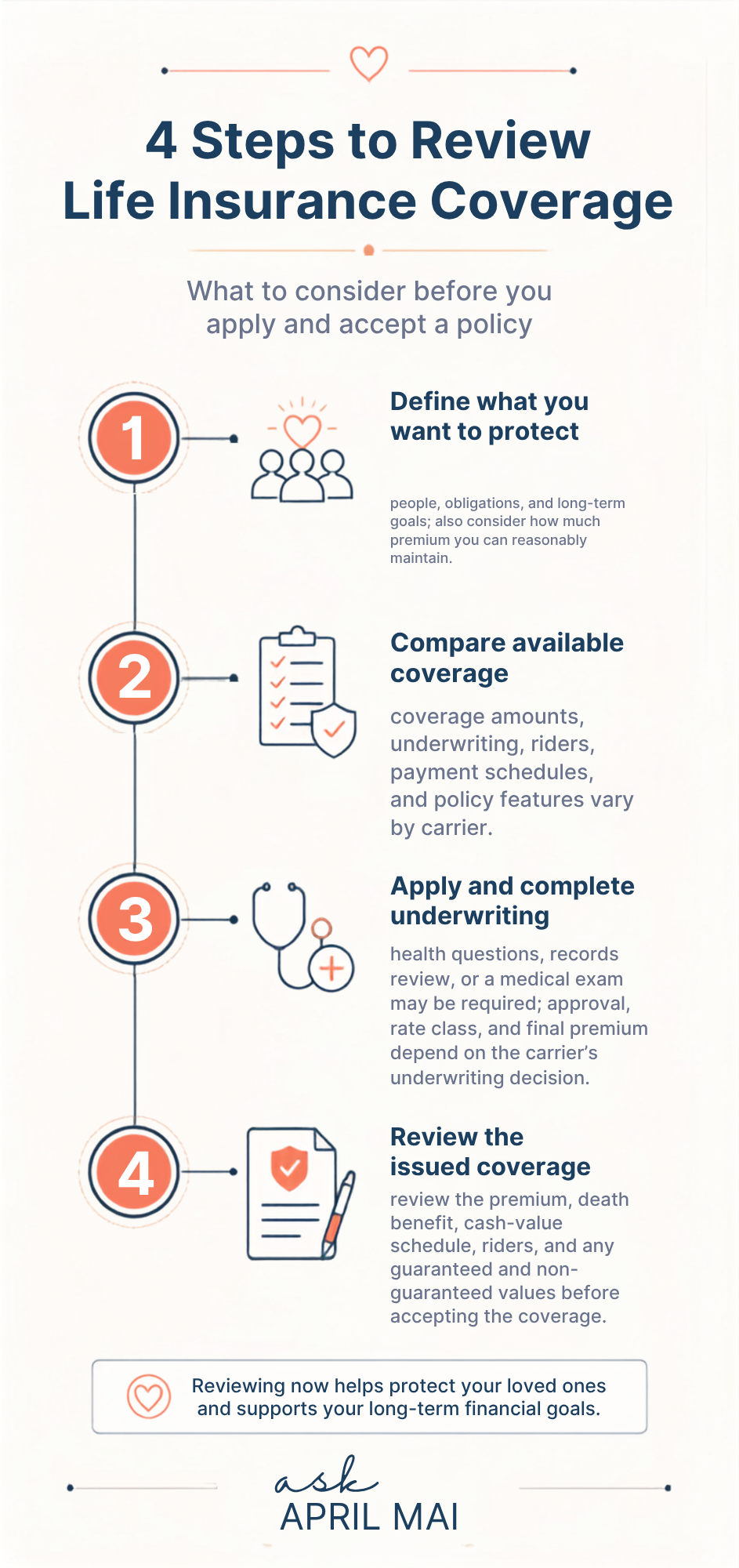
What happens after the initial term depends on the contract. Coverage may end, continue on a renewable basis at a higher premium or offer a conversion option before a stated deadline.
What happens when term life insurance ends?

Those choices are not interchangeable
Letting coverage end may make sense if the original need no longer exists and other resources are sufficient.
Renewing the coverage may allow protection to continue without new medical underwriting, but premiums can increase substantially and renewal rights may end at a specified age.
Applying for new coverage may provide a new level-term period, but eligibility and price will be based on your age, health and underwriting at that time.
Using a conversion option may allow eligible term coverage to change to an available permanent product without new medical underwriting. Products, deadlines and premiums vary by carrier.
I’ll help you understand the renewal and conversion provisions shown in the specific coverage you are considering. Do not assume you will be able to extend, replace or convert coverage later unless the contract provides that option.
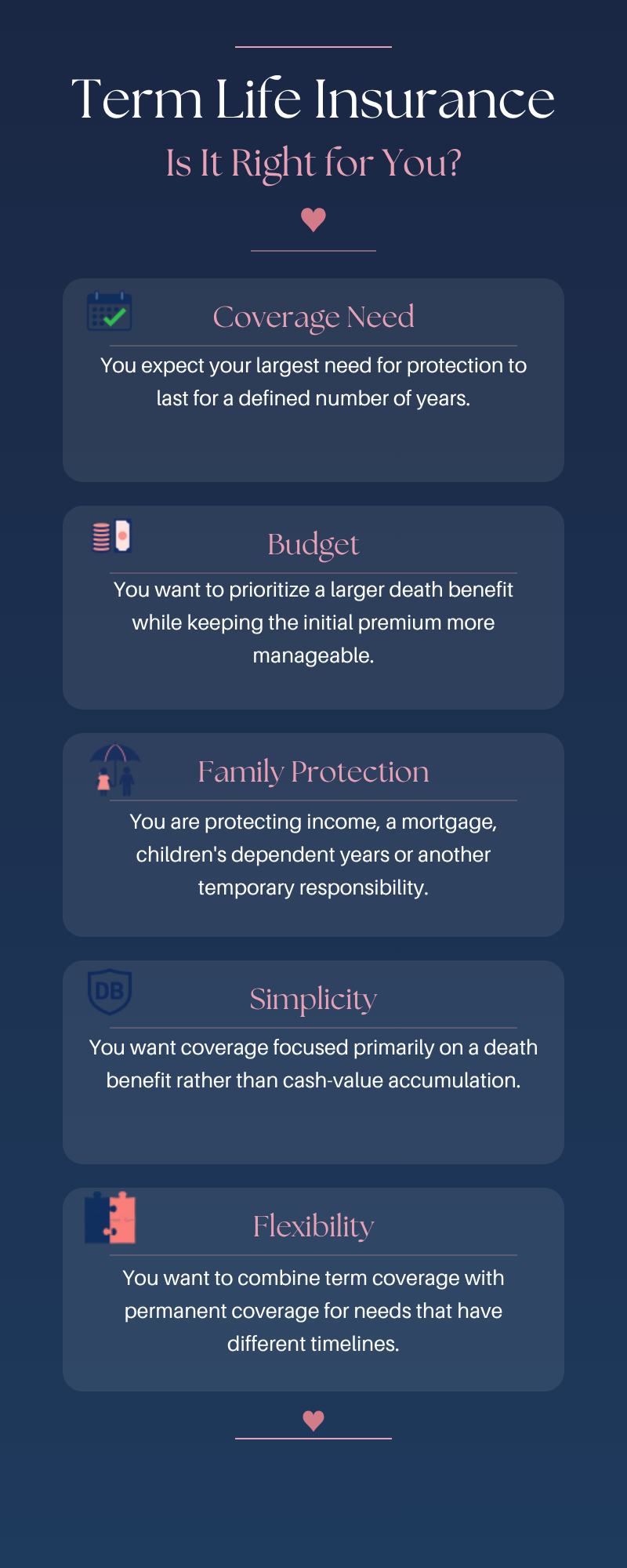
You do not need to decide which category you fall into before we talk. We can compare the tradeoffs using your actual goals, timeframe and budget.
Term life insurance vs. whole life insurance
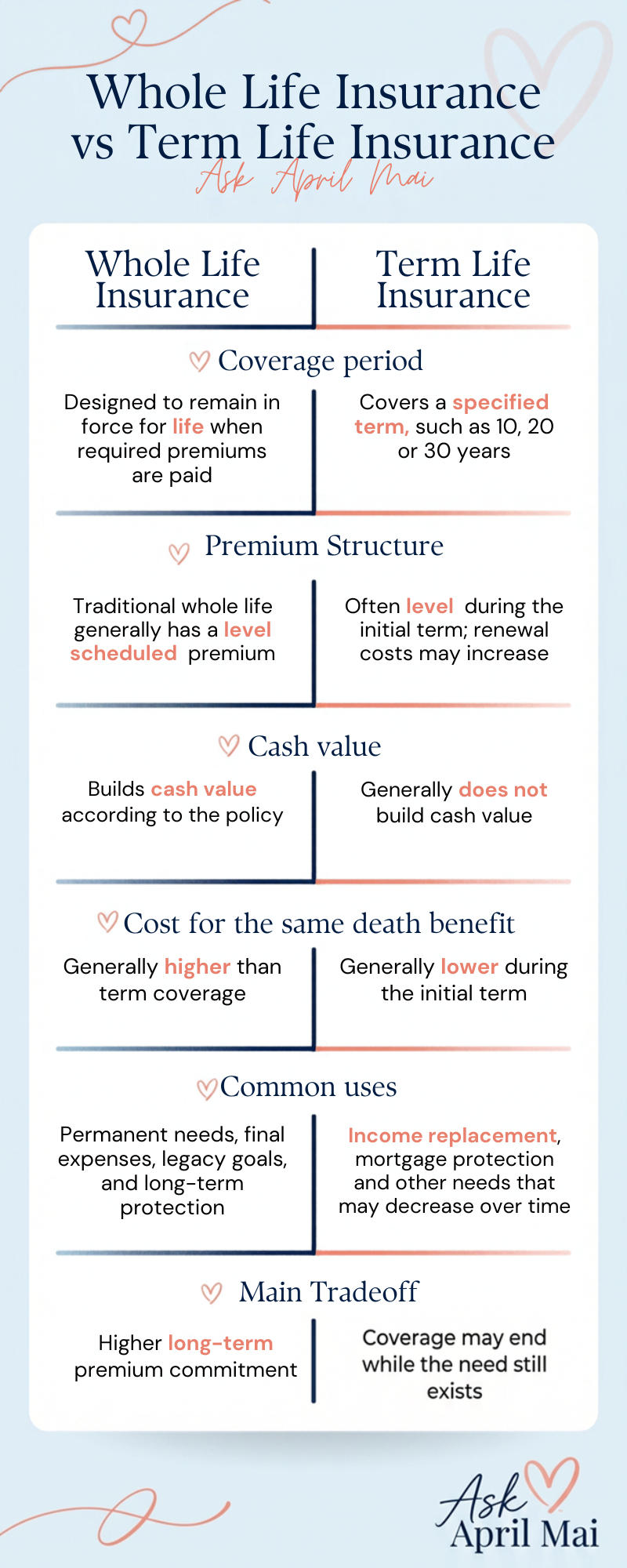
Both types can protect the people who depend on you, but they are designed for different timeframes and priorities.
The decision does not always have to be either/or. A combination of term and permanent coverage may address different needs, depending on eligibility and budget.

How much does term life insurance cost?
There is no single price for term life insurance. The premium is based on the coverage being requested and the insurance carrier’s underwriting guidelines.
Factors that can affect the premium and available options include:
Age
Current and historical health
Tobacco or nicotine use
Coverage amount
Occupation, hobbies and other underwriting factors
The insurance carrier
Length of term
Term life insurance generally costs less than whole life insurance for the same death benefit during the initial term because it provides temporary coverage and generally does not build cash value. The lowest initial premium is not the only number to consider. The term should match the need, and the coverage should be understandable and affordable enough to maintain.
Some term coverage may be available without a traditional medical exam. You may still need to answer health questions, and the carrier may use prescription history, medical records or other underwriting information to determine eligibility and pricing. No-exam coverage does not necessarily mean no underwriting.
Term life options can be structured differently
-
Coverage that generally keeps the same death benefit and scheduled premium throughout the initial term. Available terms, issue ages and coverage amounts vary by carrier.
-
Coverage that may be continued after the initial term without new evidence of insurability. Premiums generally increase, and renewal may only be available to a specified age.
-
Coverage that may allow some or all of the death benefit to be converted to an available permanent product during a specified window without new medical underwriting. Conversion rules and product choices vary.
-
Coverage with a death benefit that decreases according to the contract. It may be structured around a financial obligation expected to decline over time.
Product availability, features and underwriting requirements vary by state and carrier
Term life insurance should make sense before you commit to it

April Mai · Licensed Insurance Agent · NPN 21523134
Working with me should feel like a conversation, not a sales pitch.
We’ll start with your life: your family, goals, budget and how long you expect the need for coverage to last. If term life is worth considering, I’ll help you compare available options from multiple carriers and explain the premium schedule, death benefit, term length, riders, conversion provisions and underwriting process in plain language.
If whole life, another permanent option or a combination of coverage better matches the need we identify, we will review those options as well.
My goal is not simply to help you apply for life insurance. It is to help you understand what you are choosing, what it requires and how it is intended to protect the people who matter to you.
Complimentary consultation · Based in Concord · Serving clients throughout North Carolina, South Carolina, California, and Oregon
Frequently asked questions about term life insurance in North Carolina
-
Yes. Term life insurance is issued for a specified period. At the end of the initial term, coverage may end or may be eligible to continue under renewal provisions stated in the contract. Renewed coverage may cost substantially more.
-
Many level-term products have a premium that remains level during the initial term. Premiums may increase if coverage continues after that period. Review the guaranteed premium schedule for the specific coverage.
-
The initial term ends, and no death benefit is paid simply because the insured person outlives it. Depending on the contract, coverage may terminate, be renewable at a higher cost or have an available conversion option.
-
Term life insurance generally does not build cash value. It is primarily designed to provide a death benefit if the insured person dies while the coverage is active.
-
Consider the income, mortgage, debts, childcare, education goals and transition costs you want to protect, then subtract resources already available. The right amount should be meaningful for your family and affordable enough to keep in force.
-
Term life insurance generally has a lower initial premium than whole life insurance for the same death benefit. The actual cost depends on age, health, coverage amount, term length, features and underwriting.
-
Possibly. Some options do not require a traditional medical exam, but health questions and other underwriting information may still be used. Eligibility, coverage amounts and pricing vary by carrier.
-
Yes, if you qualify and the total coverage is financially justified. Some people use term insurance for larger temporary needs and whole life for a smaller permanent need. The amounts and types should be based on your goals and budget.
-
Do not cancel existing coverage until new coverage has been approved, accepted and placed in force. A replacement can restart contestability and suicide-exclusion periods, change features and cost more based on your current age or health. Compare both contracts carefully before making a change.
-
There is no separate fee to meet with me, review your needs, compare available options or apply for life insurance through me.