
Medicare Guidance for Turning 65, Retiring & Reviewing Your Coverage

Medicare doesn’t have to feel overwhelming.
The right next step depends on more than your age. Your enrollment timing, current coverage, doctors, prescriptions, budget, and travel needs all matter.
I’ll help you understand how Medicare works, which choices may be available to you, and what to verify before you decide.

Based in Concord, North Carolina • Serving Cabarrus County and the Charlotte area • Phone and virtual appointments available. Schedule a conversation to understand your Medicare options.
Ask April Mai is an independent insurance agency and is not affiliated with or endorsed by the U.S. government or the federal Medicare program.
I do not have access to all service plans. Medicare plan availability, benefits, costs, provider networks, formularies, and eligibility vary by plan, service area, and year. For information on all Medicare options, visit Medicare.gov or call 1-800-MEDICARE.
Get Help With Your Medicare Options
Tell me a little about what is changing and how you would like help. You are not required to enroll in a plan.
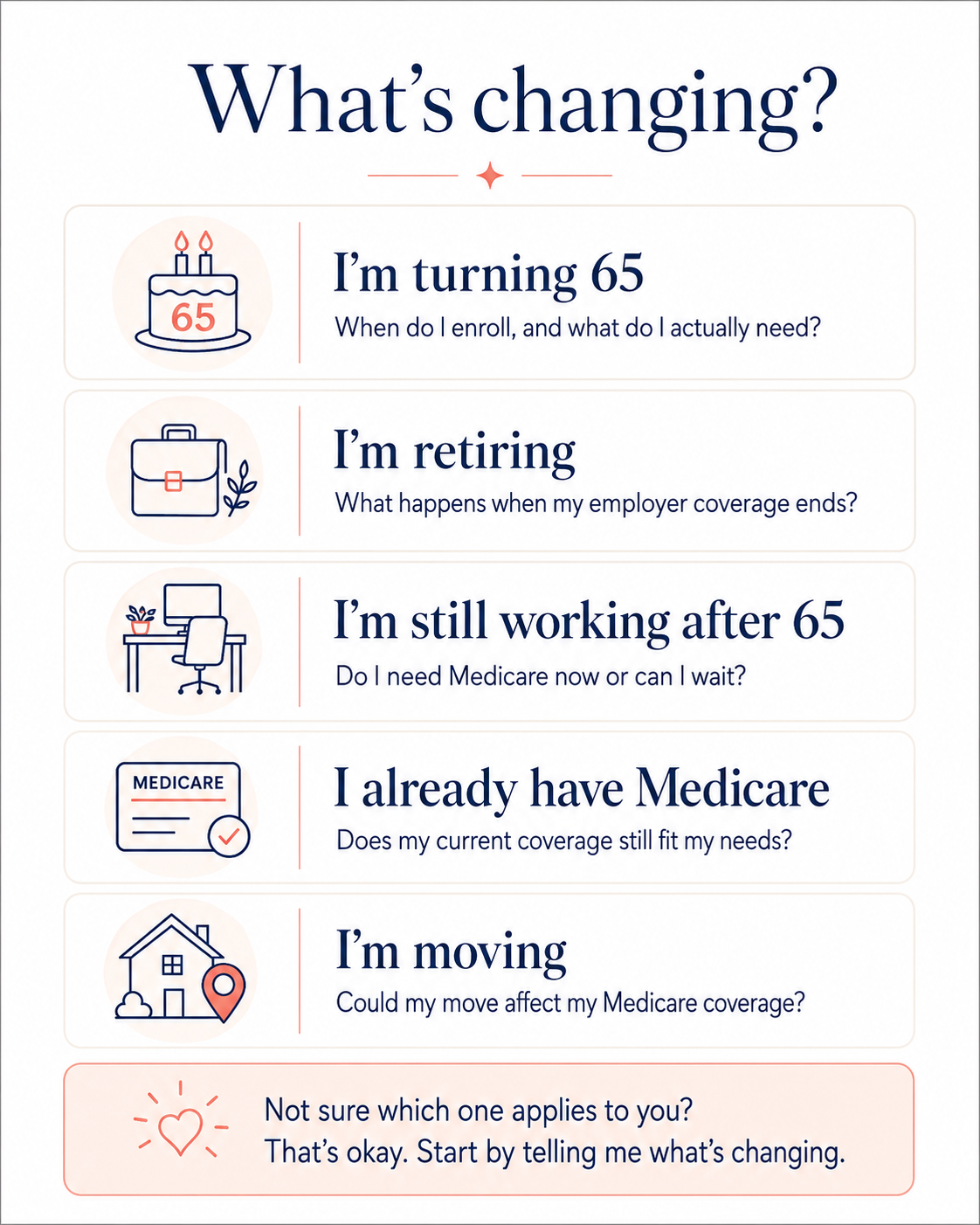
Is this you?
How does Medicare work?
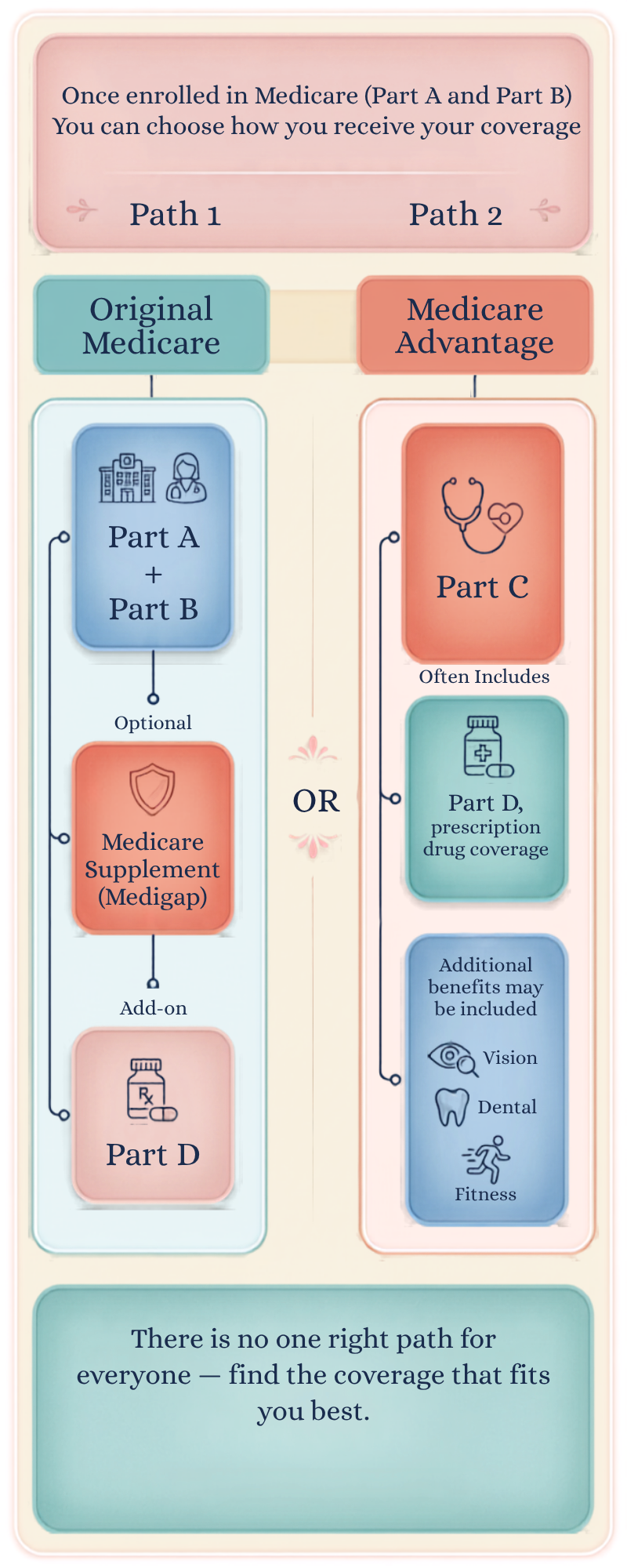
Medicare begins with Part A and Part B. Depending on your needs, additional coverage may include Medicare Advantage, Medicare Supplement insurance, or prescription drug coverage.

Part A
Hospital Insurance
Helps cover inpatient hospital care, skilled nursing facility care, hospice care and certain home health care.

Part B
Medical Insurance
Helps cover services from doctors and other health care providers, outpatient care, durable medical equipment, preventive services and certain home health care.

Part C
Medicare Advantage
A Medicare-approved private plan that provides your Part A and Part B coverage. Many plans also include Part D prescription drug coverage and may offer additional benefits.

Part D
Prescription Drug Coverage
Helps cover the cost of prescription drugs and is offered through private insurance companies that follow Medicare rules.
Medicare starts with Part A and Part B. From there, many people either keep Original Medicare and add Medigap and Part D as needed, or choose Medicare Advantage as the way they receive Medicare-covered services.
What should I consider when choosing Medicare coverage?
Start with your doctors, prescriptions, total costs, travel needs, enrollment timing, current coverage, and the way you prefer to receive care.
Doctors
Are your preferred doctors and specialists available with the coverage you’re considering?

Prescriptions
How are your medications covered, and what might you pay for them?
Travel
Do you travel frequently or spend significant time away from your local area?


Costs
Look beyond the monthly premium. Consider deductibles, copays, coinsurance, and potential out-of-pocket costs.

Your health needs
How often do you receive health care, and are there any services you rarely use?
Benefits
What additional benefits and services mean the most to you?
How will you receive your Medicare coverage?
Many people compare two paths: Original Medicare, with Medigap and Part D when appropriate, or a Medicare Advantage plan. Costs, provider access, coverage rules, and availability can vary.

Not sure which coverage path fits your needs?
Medicare guidance that starts with you.
Working with me should feel like a conversation—not a Medicare sales presentation. We'll start with your situation, the coverage you already have, your doctors, prescriptions, budget, and what matters most to you.
Understand
We'll talk through where you are and what decisions you're facing.
Review
We'll review your needs, doctors, prescriptions and current coverage.
Compare
I'll help you understand available options and how they differ.
Support
My role doesn't end with enrollment. I'm here when questions come up or your needs change.

Frequently Asked Questions
-
Original Medicare includes Part A and Part B and is administered by the federal government. You can generally see any provider nationwide who accepts Medicare. You may also choose a Medicare Supplement (Medigap) policy to help with certain out-of-pocket costs and a separate Part D plan for prescription drug coverage.
Medicare Advantage (Part C) plans are offered by private insurance companies approved by Medicare. They provide your Part A and Part B benefits and often include prescription drug coverage and additional benefits. Plan networks, costs, and benefits vary.
Neither option is automatically better—the right fit depends on your doctors, prescriptions, budget, travel habits, and healthcare needs.
-
Medicare Supplement insurance, also called Medigap, works alongside Original Medicare to help pay certain costs that Part A and Part B don't cover, such as deductibles, copayments, and coinsurance, depending on the plan.
Medigap does not replace Original Medicare. New Medigap policies sold today do not include Medicare prescription drug coverage
-
Medicare Part D is prescription drug coverage offered by private insurance companies that contract with Medicare.
With Original Medicare, you can enroll in a standalone Part D plan. Many Medicare Advantage plans include Part D coverage within the plan.
Each plan has its own formulary, or list of covered medications, as well as its own costs and pharmacy network. That's why comparing your actual prescriptions can be just as important as comparing premiums.
-
For most people becoming eligible at 65, the Initial Enrollment Period lasts seven months: the three months before the month you turn 65, your birthday month, and the three months afterward.
Eligibility for an enrollment period depends on your circumstances
There are also other enrollment periods for certain circumstances, including Special Enrollment Periods for qualifying situations. Medicare Advantage and Part D have additional periods when eligible beneficiaries can make certain changes.
Your timing matters because enrolling late in certain parts of Medicare can result in coverage gaps or late-enrollment penalties.
-
Whether you should enroll at 65 depends on the type of employer coverage you or your spouse have, whether it is based on current employment, employer size, and—when prescription drug coverage is involved—whether that drug coverage is considered creditable
-
It depends on the coverage you choose.
With Original Medicare, you can generally use any doctor or hospital in the United States that accepts Medicare. Medicare Advantage plans may use provider networks, and the rules for seeing providers outside the network vary by plan.
Checking your preferred doctors and specialists should be one of the first steps when comparing your options.
-
Often, yes—but when and how you can change coverage depends on the type of coverage and your circumstances.
Medicare provides specific enrollment periods when beneficiaries can make certain changes to Medicare Advantage and Part D coverage. Medigap works differently: depending on when you apply and your state, you may have to answer health questions or go through medical underwriting.
That's one reason it's worth considering both your current needs and how your coverage may work for you longer term.
-
Original Medicare by itself generally does not provide comprehensive outpatient prescription drug coverage. You can add a standalone Part D prescription drug plan, or choose a Medicare Advantage plan that includes prescription drug coverage.
Because plans can cover medications differently, it’s important to check your specific prescriptions rather than assuming they're covered.